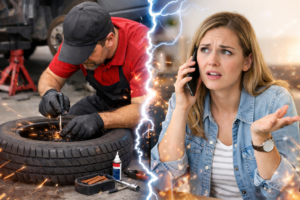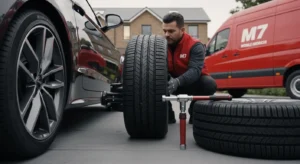
If your tire goes flat in Vancouver, the cost can change fast. A plug can be cheap, a patch can be safer, and a replacement costs the most. This guide shows what usually drives the price and when you should pick roadside tire change services instead of guessing. If you need quick help, you can book with a fast mobile tire tech.
Quick overview
- You get one price on the phone, then it jumps on site
- You do not know if your tire can be plugged or must be patched
- You are stuck in a parkade and access is tight
- You want a receipt that works for insurance
In this guide
- Clear service options like TPMS reset services and air pressure top up services
- Paperwork help with ICBC receipt tips
Simple version (pick the safest option)
- Small nail in the tread: ask about a plug
- Slow leak or bigger hole: ask about a patch
- Sidewall damage: plan on replacement
- If you cannot move: book emergency tire change services
TL;DR: plug vs patch vs replacement
- Plug: quickest fix when the hole is small and in the tread
- Patch: better seal but needs off-rim tire change services
- Replacement: needed for sidewall or bad wear; pair it with wheel balance services
What each tire fix means
A plug is a quick insert from the outside, but it is not for every hole. A patch is added from the inside after the tire is removed, which is why it can cost more. A replacement means a new tire plus mounting, and often tire swap and rotation services to keep wear even. If you are in an underground spot, read this parkade access guide first.
Context (what matters in this situation):
- Hole in tread area is usually repairable
- Sidewall cuts are usually not repairable
- Run-flat and low profile tires can take longer
- Some cars need TPMS reset services after work
A real-world pricing call in Vancouver
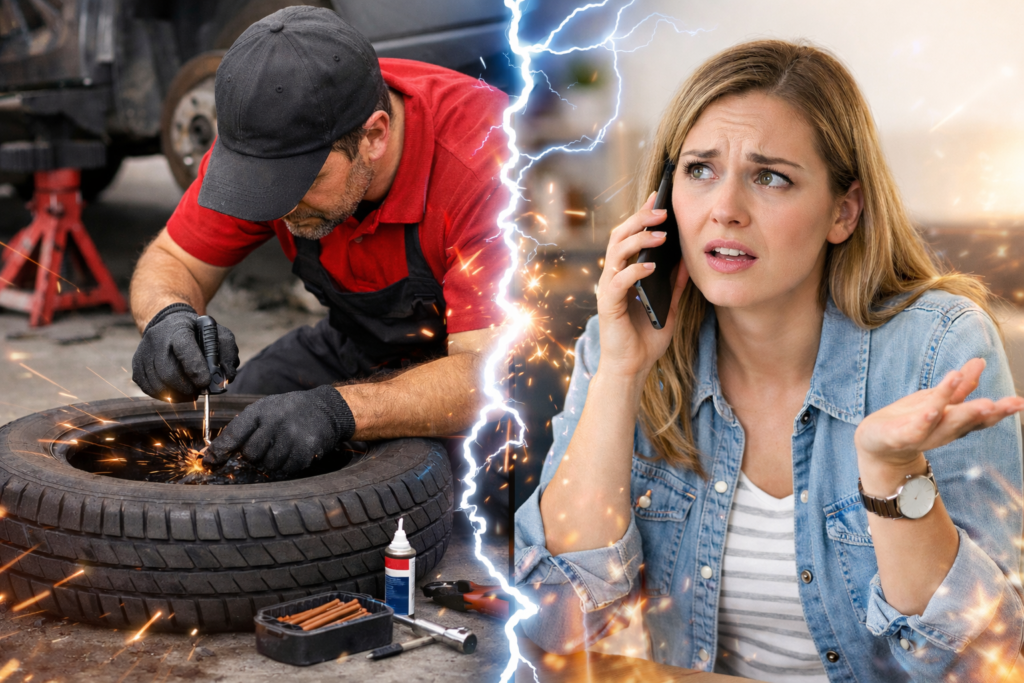
Here is how a normal call goes. You report the tire size, where the car is, and if you can roll to a safe spot. Then the tech checks the hole and offers the safest option, like a plug, a patch, or a swap with on-rim wheel swap services.
What this usually looks like (real-world flow):
- Customer notices a nail and a fast leak
- They share location and closest landmark
- Tech checks tread, depth, and sidewall
- Tech explains plug vs patch vs replacement
- Customer gets the final price before work starts
Details to confirm (so you get the right help fast):
- Parkade or tight spot may need roadside tire change services at street level
- Heavy vehicles may need truck tire change services
- EVs may need safe lift points like Tesla tire change services
What you should get as the outcome:
- You know the option and the price before tools come out
- You avoid paying for the wrong repair
- You get a clean receipt using ICBC receipt checklist
NEED FAST SERVICE?
Flat tire? We’ll come to you. 🚚💨
On-site tire patch, change, or swap—fast. Call now for immediate help, or book online anytime.
Limits, add-ons, and hidden costs to watch
Most price problems come from missing info. If you want fewer surprises, confirm access, tire size, and if you need balancing or sensors. You can also check recent customer feedback before you book.
Limits / constraints (what can slow things down):
- A plug may not be offered if the hole is too close to the sidewall
- A patch takes longer because it needs off-rim tire change services
- Some fleets use set rules like fleet tire change services
- Season changes can add demand for seasonal tire changeover services
Hidden costs to watch for:
- Extra travel if you are far from the service area
- Balancing add-on with wheel balance services
- Sensor relearn or check with TPMS reset services
- Extra time in tight access areas (see parkade clearance tips)
What to do right now
First, get safe and stop driving on a flat. Next, decide if you need a repair or a swap. If you want the fastest path, book online and share your exact spot.
- Have your tire size ready and ask if a plug or patch is possible
- If you are stuck, request emergency tire change services
Our recommendation for Vancouver drivers
Start with a quick check for nails and cuts
If the hole is in the tread, ask about a plug first
If the leak is slow or the hole is bigger, choose a patch
If the sidewall is hit, plan a replacement and add wheel balance services
If your warning light stays on, do TPMS reset services
For SUVs and trucks, use the right gear like SUV tire change services
Safety first (5 steps)
These steps help you avoid damage and stay safe while you wait.
A good option is:
- Pull over to a safe, flat spot and turn on hazards
- Do not keep driving on a flat tire
- Move to a safer pickup point if you can (see parkade access guide)
- Keep kids and pets away from traffic
- Share your exact location and a landmark when you book
Scenario 1: Nail in the tread
If it is a small nail in the middle of the tread, a plug may work. The tech will still check tire wear and the hole angle. If the tire must come off, it can switch to a patch with off-rim tire change services.
Do this:
- Send a photo of the nail if you can
- Tell the tech if the tire went flat fast
- Ask for the price before the repair starts
Scenario 2: Slow leak and low air
A slow leak may be a small puncture or a bead issue. A quick top up can help you wait safely, but it is not the final fix. Ask about air pressure top up services and then plan the best repair.
We recommend this:
- Do not ignore the leak for weeks
- Check for a screw or a shiny nail head
- If the light stays on, request TPMS reset services
Scenario 3: Sidewall damage or blowout
Sidewall damage is not safe to plug or patch. The fastest fix is a swap or replacement. If you have a spare, on-rim wheel swap services can get you moving.
Here’s a simple path forward:
- Do not drive on a shredded sidewall
- Have wheel lock key ready if you have one
- For bigger vehicles, ask for truck tire change services
Suggested plan:
Step 1: Book online
Use the online form so the tech knows your tire size, your spot, and what you need. If you want an arrival update, read how ETA text updates work.
Step 2: Share your exact location
Send the closest address, a landmark, and tell us if you are in a parkade or on a busy street.
Step 3: Pick the right service option
If you are not sure, pick the option that matches your situation. After the tire is safe, you can add wheel balance services or TPMS reset services if needed.
Tire safety checklist
If you are not sure if a tire can be repaired, use a simple safety checklist before you decide. The FAQ
A plug can be safe when the hole is small and in the tread area. If the puncture is near the sidewall, a patch or replacement is safer. If you are unsure, start with roadside tire change services and let the tech inspect it. A patch needs the tire removed from the wheel, then cleaned and sealed from the inside. That is why it often includes off-rim tire change services. It takes more time but can seal better. Sometimes yes, but clearance and safe access matter. Read the underground parkade flat tire guide and tell dispatch your height limit. If access is too tight, the safest plan is meeting at street level for roadside tire change services. Most simple puncture repairs do not need balancing. If a tire is removed or you feel shaking, ask about wheel balance services. Balancing helps reduce vibration and uneven wear. Sometimes it resets after you drive, but many vehicles need a relearn. If the light stays on, book TPMS reset services. This helps make sure your sensor reads the right pressure. Yes, ask for a detailed receipt with the service name and date. Use this receipt checklist for reimbursement so you do not miss key details. Keep photos of the tire and the puncture if you can.
Mobile tire change, flat tire repair, and tire inflation at home, work, or roadside.
Book online in minutes or call now.
Is a plug safe for highway driving?
Why does a patch cost more than a plug?
Can you repair a flat in an underground parkade?
Do I need balancing after a tire repair?
Will my tire pressure light turn off on its own?
Can I get a receipt for insurance or reimbursement?
Flat tire? Need new tires installed?
We come to you.